The AI Frontier: Robotics, Simulators, and the Future of Labor
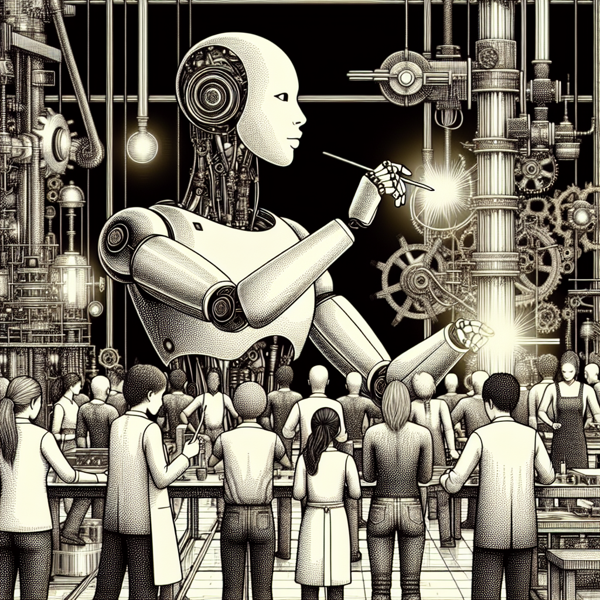
In this episode, Andrew Mayne, Justin Robert Young, and Brian Brushwood discuss the recent flurry of AI announcements from OpenAI’s Shipmas event and Google’s AI developments. They explore the implications of advanced AI models like GPT-3 and OpenAI’s O3, touching on their potential to revolutionize coding, problem-solving, and even the future of robotics and labor. The hosts speculate on how these technologies could lead to a new era of automation, where tasks from coding to physical labor could be handled by AI-driven robots. They also touch on the concept of physics simulators and their role in advancing robotics by allowing for more efficient testing and development.
Picks:
Brian: The Good Place
Justin: We Have Never Been Woke by Musa al-Gharbi
Andrew: What We Do in the Shadows
Episode Notes
The episode opens with a discussion of OpenAI's Shipmas announcements and a comparison with Google's recent AI releases. The hosts focus on OpenAI's o3 model, describing it as a real, usable research milestone and noting that it scored highly on the ARC Prize benchmark and coding evaluations, while also acknowledging that some announced features are not immediately available to everyone.
The conversation then broadens into how current AI tools are being used in practice. The hosts talk about ChatGPT integrations with Notion, desktop and screen-sharing features, model switching when one tool is not suited to a task, and the brittleness of AI outputs when prompts or settings change. The latter half shifts to robotics and simulators, especially how physics simulation could accelerate robotics development and how cheaper, more capable robots could change labor and local production. The episode closes with several media picks.
Key topics
- OpenAI Shipmas and Google's AI announcements: The hosts compare OpenAI's 12 days of releases with Google's announcements, arguing that OpenAI's products are more immediately usable while Google's demos appear more limited in access.
- o3, ARC Prize, and AI benchmarks: A major segment focuses on o3, the ARC Prize visual reasoning benchmark, and coding evals. Andrew explains how the benchmark works and why the o-series models' higher scores matter.
- AI workflow integration and desktop assistance: The speakers discuss ChatGPT working with Notion, screen sharing, app integration, and Mac automations as steps toward AI becoming a practical desktop assistant.
- Model choice and brittle AI behavior: Brian's coin-flip CSV example and the advanced voice mode Matt Berry anecdote are used to show that different models have different strengths and that outputs can degrade when nudged or repurposed.
- ChatGPT distribution through phone and messaging: They discuss 1-800-CHATGPT, WhatsApp availability, and iOS integration as ways OpenAI is trying to make ChatGPT accessible beyond the app.
- Robotics, world simulators, and labor: The episode ends with a long discussion of Sora, Genesis, physics simulation, and how better simulators could speed robotics progress and reshape labor, fabrication, and existing infrastructure.
Picks
- Brian Brushwood: The Good Place — He clearly recommends revisiting the show, saying the family is nearly through season one and that it is a lot of fun and a great show.
- Brian Brushwood: How to Be Perfect — He enthusiastically says he is buying Michael Schur's book right now after learning it was written by the showrunner of The Good Place.
- Justin Robert Young: We Have Never Been Woke — He explicitly encourages the hosts and listeners to read it, while noting it is a serious academic sociology book rather than a hot-take read.
- Andrew Mayne: What We Do in the Shadows — He strongly endorses the show, recommending the last episode of the season and saying he loves the show.